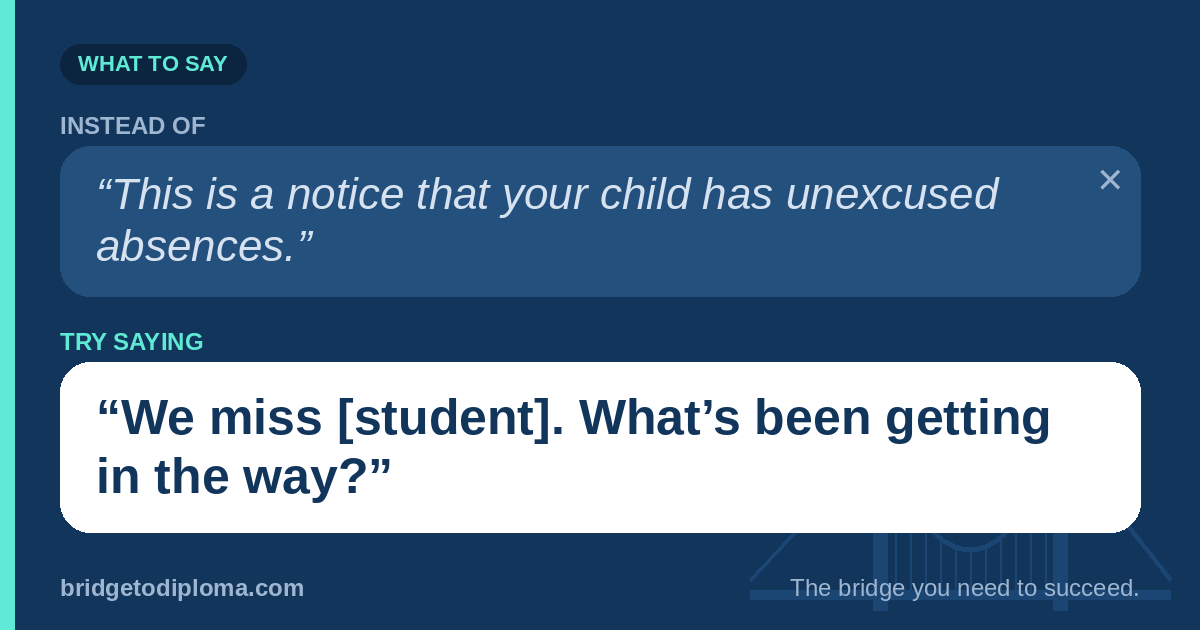
Automated calls and warning letters document attendance. They rarely solve it. A short, human call can reveal what a letter never will.
A simple five-step structure
- Connect. “Hi, this is [name] from [school]. I’m calling because we miss [student] and want to help.”
- Share the facts gently. “We’ve noticed [number] absences this month.”
- Ask. “What’s been getting in the way?”
- Offer one support. A schedule change, transportation help, or a meeting with a counselor.
- Set a follow-up. “Can I call you next Thursday to see how it’s going?”
Keep it judgment-free
Families often hear attendance calls as accusations. Naming the shared goal, “we want [student] to succeed,” keeps everyone on the same side of the table.
Read: Attendance starts with connection →
Related reading
- What Teachers Can Say When a Student Wants to Quit
- How Families Can Help Without Making Things Worse
- Get Support
Educational guidance only. Requirements vary by state and district. If a student may be in danger, follow your school’s safety procedures and contact emergency services (911) or crisis support (call or text 988 in the U.S.).
Leave a Reply